Envelopes with a difference…the history and the future

envelope

Today’s Feelology post will consider the past and the future of envelopes.  When confronted with the paper envelopes we are all so familiar with today, it is strange to think that the form of postal message sending with which we are so familiar used to be a whole lot heavier!

2000 years B.C., the Babylonian civilization (located near present-day Iraq) baked clay wrappers around important documents to protect them. These documents were not like the letters we know today, but instead were written on clay tablets. These tablets were also baked.  Breaking the tablet open would reveal the message inside (see image above).

This postal method ensured security, as once broken, the clay envelopes could not be resealed. Just as the earliest postal envelopes were much heavier than those used today, more recent incarnations of the item did away with coverings altogether! Some of the first paper-based postal envelopes were actually nothing more than folded sheets of papers, letters posted without envelops. Once a writer had finished writing their letter it would folded, leaving a blank outside where the address would be written. This fold would be sealed with a wax. Perhaps surprisingly, especially given how much is known about the early history of paper envelope precursors, the early history of the paper envelope remains a relative mystery.

However, we do know that the folded diamond shape envelopes we are familiar with today were initially made by and used in the 19th century as novelty letter wrappers among the more privileged echelons of society. We also know a little more about how early postage rates worked. To begin with, early postage rates were calculated on the basis of the number of sheets of paper that were included, rather than being based on distance or weight (as they are today).

The first envelope making machines were patented in the UK in 1845 and in the USA in 1953. Inventors such as the Swift Brothers invented numerous self-gumming machines, which aided the future of mass-producing envelopes and helped envelopes reach their current form.

Moving from the past now to the future of envelopes and envelope making, the threats postal services the world over have suffered from the internet are well documented. However, a recent Nielsen study revealed that even in this digital age and beyond, envelopes do have a future.

For example, their study found that individually printed, physical envelopes are actually regarded more positively by younger target groups than older ones. With recent innovations and trends, such as increasing the use of recycled paper as a raw material and moving to more futuristic designs, the digital natives of today may well become the envelope lovers of the future, as long as envelope manufactures turn to more individualized offerings.

Envelopes are often taken for granted, but they shouldn’t be. They are the first thing that is seen and are the prelude to its contents. A quality envelope, coupled with traditional print techniques, gives off notes of prestige, importance and elegance –this has been paramount throughout the ages, and will continue to be important for decades yet to come.
You might also like...

Ibrahim’s snowflake engraving melts the heart of HEA judges

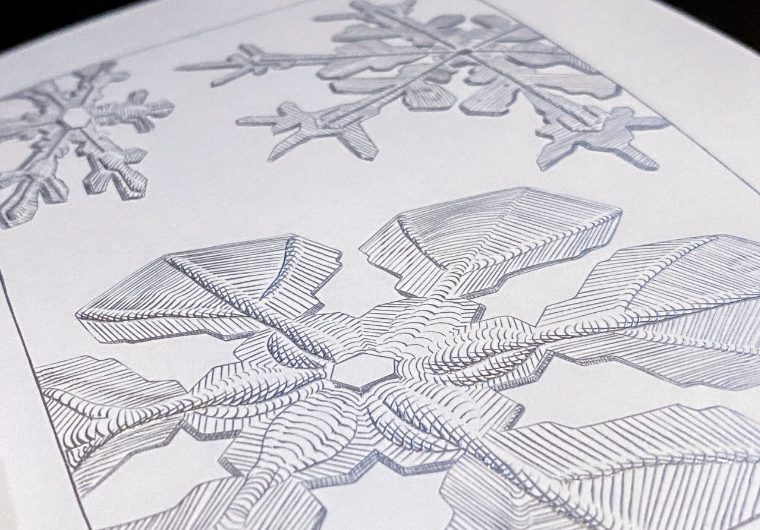
A Cambridgeshire man who has been engraving for 10 years, has triumphed in the Hand Engravers’ Association Christmas card competition. Ibrahim Batchelder entered a design that encapsulated the frozen close-up geometry of a snowflake. And the winning piece was silver die-stamped by Baddeley Brothers, who sponsor the competition every year. The snowflake design took Ibrahim around four days to complete. ... Read more

V&A museum project highlights how the die-cutting process and envelope-making are relevant to everyday home life.

A filming project that features the craft of the die-cutting process and envelope-making happening right on our doorstep was too good an opportunity to miss. The production team at the Victoria and Albert Museum, who wanted to document our industrial manufacturing processes alongside domestic procedures, contacted us last year. And it is just part of ... Read more

Is it curtains for traditional paper as FibreLab recycles textile waste into paper for printing and packaging?

A collaboration with a textile company has yielded impressive results after fibres from discarded cloth have been successfully recycled into paper products that can be printed on. Baddeley Brothers has been working with FibreLab to test printing on Papertex, the name being given to an innovation by the East London company. FibreLab is a hyper-local ... Read more

Art catalogue cover for Gagosian Gallery is ‘a wonderful illustration’ of what 9-colour die-stamping can achieve

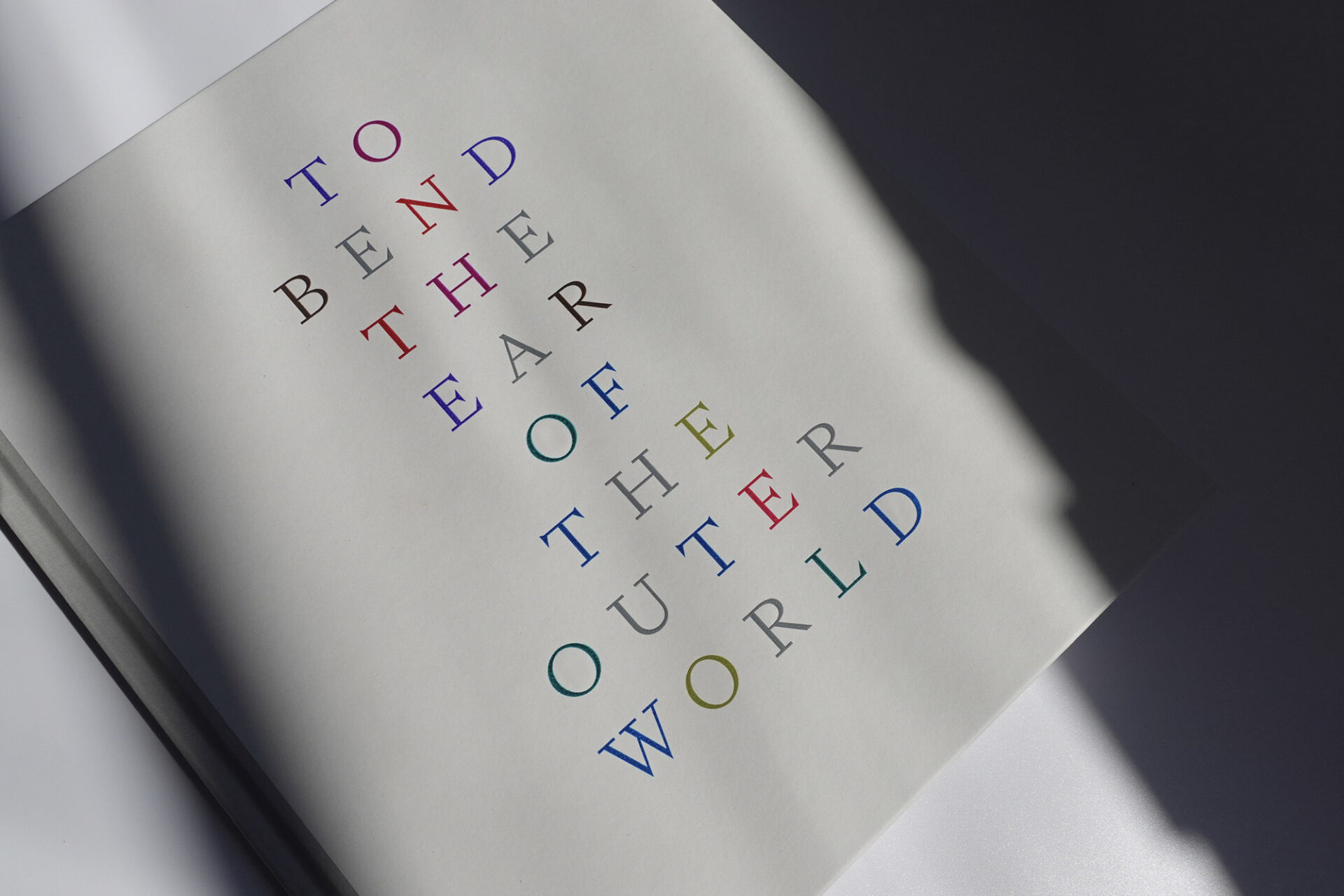
A casebound book cover that catalogues an abstract art exhibition was a perfect fusion of art and craft, and a meeting of minds for Baddeley Brothers and Paul Neale, Creative Director with Graphic Thought Facility. To Bend The Ear Of The Outer World is a catalogue to accompany an exhibition of contemporary abstract paintings held ... Read more

Students team up and bond over foil blocking for university collaboration

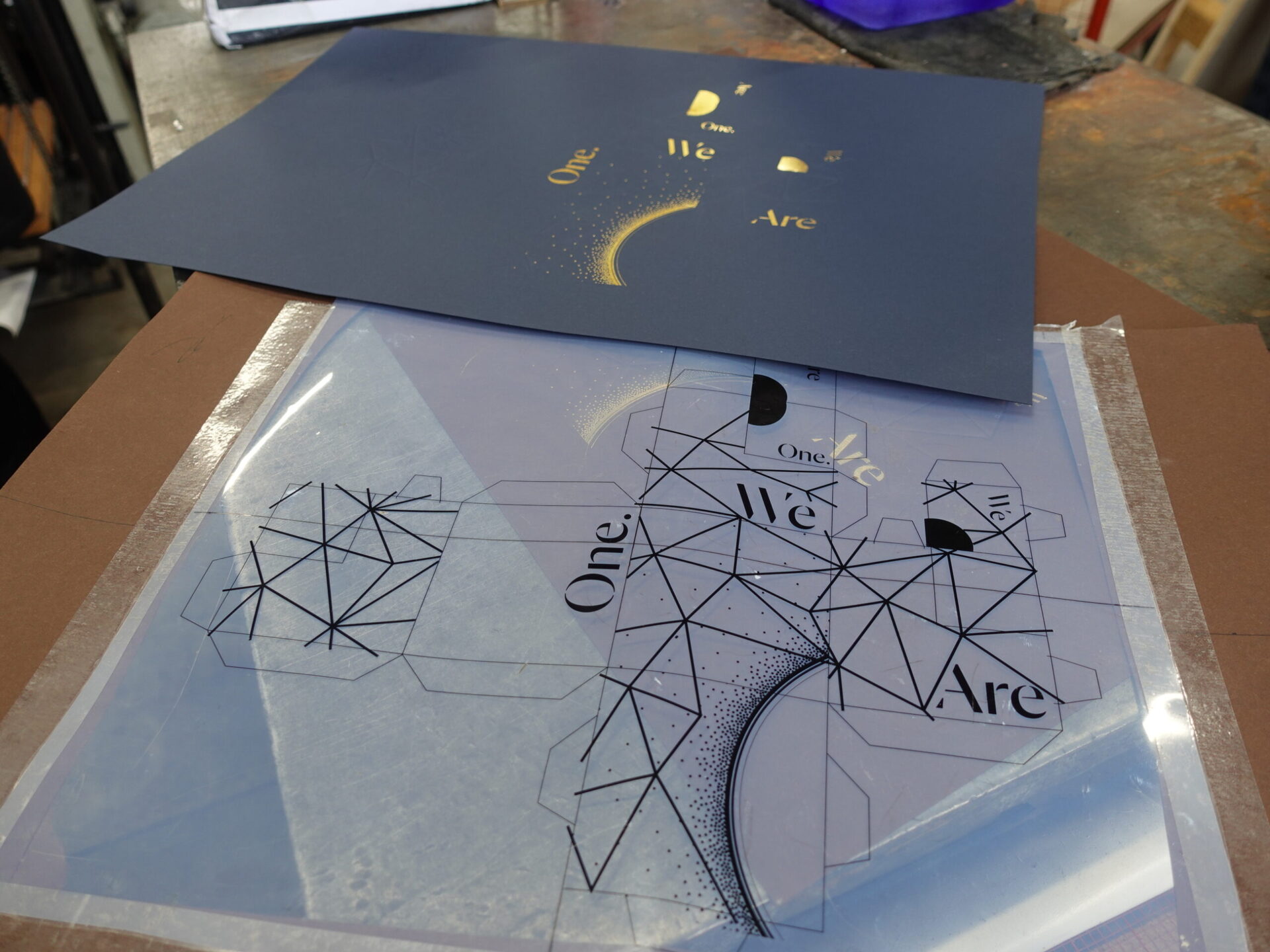
Two students from Ravensbourne University have once again created a unique and inspiring piece that celebrates uniqueness. Rose Lwin and Jada Perry elected to take part in the Imprint Impress project, which is a collaboration between Baddeley Brothers, the university, GF Smith Papers and Foilco. Together they designed, costed and produced a piece for print, ... Read more

Engraver Megan’s stag comes to life in print

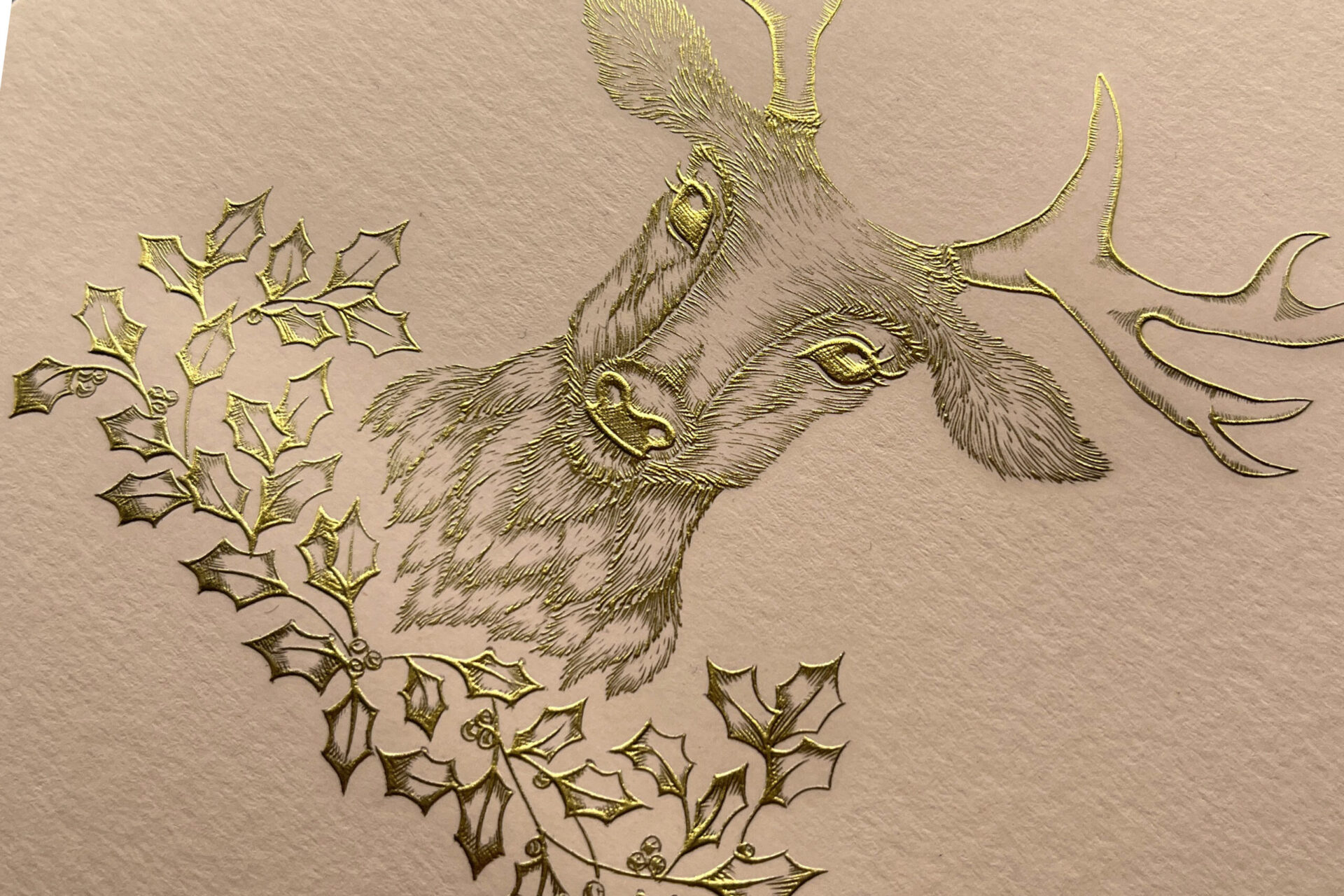
A young apprentice hand engraver has visited Baddeley Brothers to see her winning artwork made into Christmas cards. Megan Rigby’s engraving was the winning entry in a competition run by the Hand Engravers’ Association, which is supported by the 160-year-old printing company. During her visit, she met with director Charles Pertwee and watched as the ... Read more
bb Luc square

6 Years of Imprint! Impress! Luc makes a monolithic protest using foiling against the onslaught of plastic

A design student has made a bold statement against plastics with an artwork made from foiling paper, while exploring the opportunities and artistic beauty of foil blocking. Luc Crossley was this year’s candidate for the Imprint Impress project undertaken every year in a collaboration between Ravensbourne University, Baddeley Brothers, GF Smith and Foilco. Luc is ... Read more
bb notpla leaf square

Beautiful seaweed paper turns the tide on printing stock

UPDATE: Congratulations to Notpla – 2022 Winners of The Earthshot Prize You might think a company founded 160 years ago, and enormously proud of their role in preserving traditional printing techniques, wouldn’t be playing with paper made from weeds. But you’d be wrong. The sixth-generation family firm championing the methods used to print the first ... Read more
1 e1651757883147

Reflect with us – 2021 A Year in Review

Reflect with us, as we look over the previous year, and celebrate all of the joyous moments and achievements that were made here at Baddeley Brothers.
AndyandJonDiscussJob1000

Prize-winning hand engraver gets invitation to see his “Santa” on press

A Surrey man who was the winner of a competition held by the Hand Engravers Association of Great Britain, and sponsored by Baddeley Brothers, has seen his work go into production. As part of Andy Beavan-smith’s prize, he got a behind-the-scenes tour of the 160-year-old print works, to see his copperplate engraving, “Santa in his ... Read more